
JNTUK R20 3-1 Design and Analysis of Algorithms Material PDF Download

JNTUK R20 3-1 Design and Analysis of Algorithms Material PDF Download

Students those who are studying JNTUK R20 CSE Branch, Can Download Unit wise R20 3-1 Design and Analysis of Algorithms (DAA) Material/Notes PDFs below.

jntuk-materials

JNTUK R20 3-1 Design and Analysis of Algorithms Material PDF Download

OBJECTIVES: Upon completion of this course, students will be able to do the following:

  • Ability to understand, analyze and denote time complexities of algorithms
  • To introduce the different algorithmic approaches for problem solving through numerous example problems
  • Describe the dynamic-programming paradigm and explain when an algorithmic design situation calls for it. Recite algorithms that employ this paradigm. Synthesize dynamic-programming algorithms, and analyze them.
  • To provide some theoretical grounding in terms of finding the lower bounds of algorithms and the NP-completeness

Course Outcomes: After the completion of the course, student will be able to

  • Analyze the performance of a given algorithm, denote its time complexity using the asymptotic notation for recursive and non-recursive algorithms
  • List and describe various algorithmic approaches and Solve problems using divide and conquer &greedy Method
  • Synthesize efficient algorithms dynamic programming approaches to solve in common engineering design situations.
  • Organize important algorithmic design paradigms and methods of analysis: backtracking, branch and bound algorithmic approaches
  • Demonstrate NP- Completeness theory ,lower bound theory and String Matching

UNIT-1

Introduction: Algorithm Definition, Algorithm Specification, performance Analysis, Performance measurement, asymptotic notation, Randomized Algorithms.

Download UNIT-1 Material PDF | Reference-2

UNIT-2

Divide and Conquer: General Method, Defective chessboard, Binary Search, finding the maximum and minimum, Merge sort, Quick sort.

The Greedy Method: The general Method, knapsack problem, minimum-cost spanning Trees, Optimal Merge Patterns, Single Source Shortest Paths.

Download UNIT-2 Material PDF | Reference-2

UNIT-3

Dynamic Programming: The general method, multistage graphs, All pairs-shortest paths, optimal Binary search trees, 0/1 knapsack, The traveling salesperson problem.

Download UNIT-3 Material PDF | Reference-2

UNIT-4

Backtracking: The General Method, The 8-Queens problem, sum of subsets, Graph coloring, Hamiltonian cycles, knapsack problem.

Download UNIT-4 Material PDF | Reference-2

UNIT-5

NP-Hard and NP-Complete problems: Basic concepts, non-deterministic algorithms, NP – Hard and NP-Complete classes, Cook’s theorem.

Download UNIT-5 Material PDF | Reference-2


TEXT BOOKS:

  1. Ellis Horowitz, SartajSahni, Sanguthevar Rajasekaran, “Fundamentals of Computer Algorithms”, 2nd Edition, Universities Press.
  2. Introduction to Algorithms Thomas H. Cormen, PHI Learning
  3. Harsh Bhasin, “Algorithms Design & Analysis”, Oxford University Press.

REFERENCE BOOKS:

  1. Horowitz E. Sahani S: “Fundamentals of Computer Algorithms”, 2nd Edition, Galgotia Publications, 2008.
  2. S. Sridhar, “Design and Analysis of Algorithms”, Oxford University Press.
JNTUK R20 3-1 Data Warehousing and Data Mining Material PDF Download

JNTUK R20 3-1 Data Warehousing and Data Mining Material PDF Download

Students those who are studying JNTUK R20 CSE Branch, Can Download Unit wise R20 3-1 Data Warehousing and Data Mining (DW&DM) Material/Notes PDFs below.

jntuk-materials

JNTUK R20 3-1 Data Warehousing and Data Mining Material PDF Download

Course Objectives: The main objectives are

  • Introduce basic concepts and techniques of data warehousing and data mining
  • Examine the types of the data to be mined and apply pre-processing methods on raw data
  • Discover interesting patterns, analyze supervised and unsupervised models and estimate the accuracy of the algorithms.

Course Outcomes: At the end of the course, the students will be able to:

  • Illustrate the importance of Data Warehousing, Data Mining and its functionalities and Design schema for real time data warehousing applications.
  • Demonstrate on various Data Preprocessing Techniques viz. data cleaning, data integration, data transformation and data reduction and Process raw data to make it suitable for various data mining algorithms.
  • Choose appropriate classification technique to perform classification, model building and evaluation.
  • Make use of association rule mining techniques viz. Apriori and FP Growth algorithms and analyze on frequent itemsets generation.
  • Identify and apply various clustering algorithm (with open source tools), interpret, evaluate and report the result.

UNIT-1

Data Warehousing and Online Analytical Processing: Data Warehouse: Basic concepts, Data Warehouse Modelling: Data Cube and OLAP, Data Warehouse Design and Usage, Data Warehouse Implementation, Introduction: Why and What is data mining, What kinds of data need to be mined and patterns can be mined, Which technologies are used, Which kinds of applications are targeted.

Download UNIT-1 Material PDF

UNIT-2

Data Pre-processing: An Overview, Data Cleaning, Data Integration, Data Reduction, Data Transformation and Data Discretization.

Download UNIT-2 Material PDF

UNIT-3

Classification: Basic Concepts, General Approach to solving a classification problem, Decision Tree Induction: Attribute Selection Measures, Tree Pruning, Scalability and Decision Tree Induction, Visual Mining for Decision Tree Induction.

Download UNIT-3 Material PDF

UNIT-4

Association Analysis: Problem Definition, Frequent Item set Generation, Rule Generation: Confident Based Pruning, Rule Generation in Apriori Algorithm, Compact Representation of frequent item sets, FPGrowth Algorithm.

Download UNIT-4 Material PDF

UNIT-5

Cluster Analysis: Overview, Basics and Importance of Cluster Analysis, Clustering techniques, Different Types of Clusters; K-means: The Basic K-means Algorithm, K-means Additional Issues, Bi-secting K Means.

Download UNIT-5 Material PDF


TEXT BOOKS:

1. Data Mining concepts and Techniques, 3/e, Jiawei Han, Michel Kamber, Elsevier, 2011.

2. Introduction to Data Mining: Pang-Ning Tan & Michael Steinbach, Vipin Kumar, Pearson, 2012.

REFERENCE BOOKS:

1. Data Mining Techniques and Applications: An Introduction, Hongbo Du, Cengage Learning.

2. Data Mining: VikramPudi and P. Radha Krishna, Oxford Publisher.

3. Data Mining and Analysis – Fundamental Concepts and Algorithms; Mohammed J. Zaki, Wagner Meira, Jr, Oxford

4. Data Warehousing Data Mining & OLAP, Alex Berson, Stephen Smith, TMH. http://onlinecourses.nptel.ac.in

5. (NPTEL course by Prof.Pabitra Mitra) http://onlinecourses.nptel.ac.in

6. (NPTEL course by Dr. Nandan Sudarshanam& Dr. Balaraman Ravindran) http://www.saedsayad.com

JNTUK R20 3-1 Distributed Systems Material/Notes PDF Download

JNTUK R20 3-1 Distributed Systems Material/Notes PDF Download

Students those who are studying JNTUK R20 CSE Branch, Can Download Unit wise R20 3-1 Distributed Systems Material/Notes PDFs below.

jntuk-materials

JNTUK R20 3-1 Distributed Systems Material/Notes PDF Download

OBJECTIVES:

  • To understand the foundations of distributed systems.
  • To learn issues related to clock Synchronization and the need for global state in distributed systems
  • To learn distributed mutual exclusion and deadlock detection algorithms
  • To understand the significance of agreement, fault tolerance and recovery protocols in Distributed Systems
  • To learn the characteristics of peer-to-peer and distributed shared memory systems

UNIT-1

Distributed Systems: Definition, Relation to computer system components, Motivation, Relation to parallel systems, Message-passing systems versus shared memory systems, Primitives for distributed communication, Synchronous versus asynchronous executions, Design issues and challenges.

A model of distributed computations: A distributed program, A model of distributed executions, Models of communication networks, Global state, Cuts, Past and future cones of an event, Models of process communications.

Logical Time: A framework for a system of logical clocks, Scalar time, Vector time, Physical clock synchronization: NTP.

Download UNIT-1 Material PDF | Reference-2

UNIT-2

Message Ordering & Snapshots: Message ordering and group communication: Message ordering paradigms, Asynchronous execution with synchronous communication, Synchronous program order on an asynchronous system, Group communication, Causal order (CO), Total order. Global state and snapshot recording algorithms: Introduction, System model and definitions, Snapshot algorithms for FIFO channels.

Download UNIT-2 Material PDF | Reference-2

UNIT-3

Distributed Mutex & Deadlock: Distributed mutual exclusion algorithms: Introduction – Preliminaries – Lamport‘s algorithm – Ricart-Agrawala algorithm – Maekawa‘s algorithm – Suzuki–Kasami‘s broadcast algorithm. Deadlock detection in distributed systems: Introduction – System model – Preliminaries – Models of deadlocks – Knapp‘s classification – Algorithms for the single resource model, the AND model and the OR model.

Download UNIT-3 Material PDF | Reference-2

UNIT-4

Recovery & Consensus: Check pointing and rollback recovery: Introduction – Background and definitions – Issues in failure recovery – Checkpoint-based recovery – Log-based rollback recovery – Coordinated check pointing algorithm – Algorithm for asynchronous check pointing and recovery. Consensus and agreement algorithms: Problem definition – Overview of results – Agreement in a failure – free system – Agreement in synchronous systems with failures.

Download UNIT-4 Material PDF | Reference-2

UNIT-5

Peer-to-peer computing and overlay graphs: Introduction – Data indexing and overlays – Chord – Content addressable networks – Tapestry.

Distributed shared memory: Abstraction and advantages – Memory consistency models –Shared memory Mutual Exclusion.

Download UNIT-5 Material PDF | Reference-2

e-Resources:

https://nptel.ac.in


TEXT BOOKS:

  1. Distributed Systems Concepts and Design, George Coulouris, Jean Dollimore and Tim Kindberg, Fifth Edition, Pearson Education, 2012.
  2. Distributed computing: Principles, algorithms, and systems, Ajay D Kshemkalyani and Mukesh Singhal, Cambridge University Press, 2011.

REFERENCE BOOKS:

  1. Distributed Operating Systems: Concepts and Design, Pradeep K Sinha, Prentice Hall of India, 2007.
  2. Advanced concepts in operating systems. Mukesh Singhal and Niranjan G. Shivaratri, McGraw-Hill, 1994.
  3. Distributed Systems: Principles and Paradigms, Tanenbaum A.S., Van Steen M.,Pearson Education, 2007.

OUTCOMES:

  • Elucidate the foundations and issues of distributed systems
  • Illustrate the various synchronization issues and global state for distributed systems
  • Illustrate the Mutual Exclusion and Deadlock detection algorithms in distributed systems
  • Describe the agreement protocols and fault tolerance mechanisms in distributed systems
  • Describe the features of peer-to-peer and distributed shared memory systems

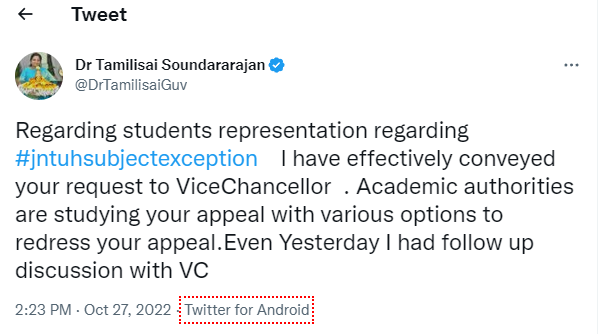
JNTUH Governor Dr Tamilisai Soundararajan Tweet Regarding Subject Exemption for R18 Students

JNTUH Governor Dr Tamilisai Soundararajan Tweet Regarding Subject Exemption for R18 Students

JNTUH Governor Dr Tamilisai Soundararajan Tweet Regarding Subject Exemption for R18 Students

Regarding students representation regarding #jntuhsubjectexception l have effectively conveyed your request to Vice Chancellor . Academic authorities are studying your appeal with various options to redress your appeal. Even Yesterday I had follow up discussion with VC.

JNTUH B.Pharmacy 3-2 Sem (R17,R16,R15,R13,R09) Regular/Supply Results Aug 2022 – Released

JNTUH B.Pharmacy 3-2 Sem (R17,R16,R15,R13,R09) Regular/Supply Results August 2022, jntuh 3-2 results 2022 for b.pharmacy r17, r16, r15, r13, r09 are released at jntuhresults.in.

JNTUH B.Pharmacy 3-2 Sem (R17,R16,R15,R13,R09) Results Feb 2022 - Released


JNTUH B.Pharmacy 3-2 Sem (R17,R16,R15,R13,R09) Regular/Supply Results Aug 2022 – Released

JNTU Hyderabad has announced II, III B.Pharmacy II Semester (R17, R16, R15, R13, R09) Regular and Supplementary Examination Results August 2022 at jntuhresults.in.

The Following Examination Results are Declared by JNTUH :

  • B.Pharmacy II Year II Sem. (R17) Regular Results August 2022
  • B.Pharmacy II Year II Sem. (R16) Supply Results August 2022
  • B.Pharmacy II Year II Sem. (R15) Supply Results August 2022
  • B.Pharmacy II Year II Sem. (R13) Supply Results August 2022
  • B.Pharmacy II Year II Sem. (R09) Supply Results August 2022

Students Check your result from below given links :

B.Pharmacy III Year II Semester (R17) Regular Examinations Results

B.Pharmacy III Year II Semester (R16) Supplementary Examinations Results

B.Pharmacy III Year II Semester (R15) Supplementary Examinations Results

B.Pharmacy III Year II Semester (R13) Supplementary Examinations Results

B.Pharmacy III Year II Semester (R09) Supplementary Examinations Results

Note: Last Date for Recounting / Revaluation Date : 29-10-2022

JNTUK MCA 4th Sem (R20,R19,R16) Regular/Supply Exam Results July 2022 – Released

JNTUK MCA 4th Sem Regular/Supply Exam Results July 2022, jntu kakinada announced mca iv sem regular & supply results 2022 are released.

JNTUK MCA 4th Sem (R20,R19,R16) Regular/Supply Exam Results July 2022

JNTUK MCA 4th Sem (R20,R19,R16) Regular/Supply Exam Results July 2022 – Released

JNTU Kakinada has released MCA 4th Sem R20, R19, R16 Sem Regular and supplementary Exam Results July 2022 at jntukresults.edu.in. JNTUK has Conducted Regular/ Supplementary Examinations in the month of July. Now, the waiting is over, students who are appeared For the IV sem Examinations can check their results from links given below.

The Following Examination Results Released JNTUK :

  • JNTUK MCA 4th Sem Exam Results July, 2022

Click on the below links to know their Results:

Results for MCA IV Semester Regular/Supply Examinations July 2022 are declared. The result sheets have been sent to respective college principals. Students are requested to contact their concerned college principals/exam cell staff for knowing the results.

 JNTUK MCA 4th Sem (R20,R19) Results July 2022 – Link Will Be Update Soon

 JNTUK MCA 4th Sem (R16) Results July 2022 – Link Will Be Update Soon

Last Date for Apply Recounting/Revaluation/Challenge By Revaluation: 26-10-2022

For Recounting/Revaluation/Challenge By Revaluation Apply through Online: Click Here

JNTUK M.Pharmacy 2nd Sem Regular/Supply Exam Time Tables Oct/Nov 2022

JNTUK M.Pharmacy 2nd Sem Regular/Supply Exam Time Tables Oct/Nov 2022, jntu kakinada m.pharmacy II semester end examination time tables 2022.

JNTUK M.Pharmacy 2nd Sem Regular/Supply Exam Time Tables Oct/Nov 2022

JNTUK M.Pharmacy 2nd Sem Regular/Supply Exam Time Tables Oct/Nov 2022

JNTU Kakinada has announced M.Pharmacy 2nd Sem PCI Regulations Regular/Supply Exam Time Tables October/November 2022 at jntuk.edu.in. Students Can check your examination time tables from official website or direct links given below.

Exams Starts From: 31-10-2022 (Monday)

Conclude on: 07-11-2022 (Monday)

Time : 10:00 AM TO 01:00 PM

The Following Examination time tables released by JNTU-Kakinada:

  • M.PHARMACY II SEMESTER (PCI) REGULAR/SUPPLEMENTARY EXAMINATIONS, OCTOBER/NOVEMBER – 2022

Download the official time tables below:

M.Pharmacy 2nd Sem (PCI) Time Table Oct/Nov 2022

JNTUA MBA R21 Syllabus & Course Structure PDF Download

JNTUA MBA R21 Syllabus & Course Structure PDF Download

jntua

JNTU Anantapur University has released Master of Business Administration (MBA) R21 Regulation Syllabus & Course Structure PDF at jntua official website, jntua.ac.in.

Students can check and download the complete syllabus pdf of JNTUA R21 MBA Course from below.

Download JNTUA R21 MBA Course Structure & Syllabus

MBA, MBA (General Management), MBA (Business Management) – R21 – Course Structure & syllabi

MBA (Healthcare & Hospital Management) – R21 – Course Structure – & syllabi

MBA (Fintechs) – R21 – Course Structure -& syllabi

MBA (Finance) – R21 – Course Structure -& syllabi

MBA (Business Data Analytics) – R21 – Course Structure -& syllabi

MBA (Big Data Analytics) – R21 – Course Structure & syllabi

MBA (Banking & Financial Services ) – R21 – Course Structure & syllabi

NOTE: R21 Regulartion: For the students admitted into I Year in 2021-22.

TS Police Constable Result 2022 (OUT) TSLPRB Prelims PC Merit List, Cutoff Marks, Selected Candidates

TS Constable Merit List (Selected Candidates) Results 2022: Telangana State Level Police Recruitment Board (TSLPRB) conducted the Prelims Written Examinations (FWE) of SCT PC Civil and/or Equivalent Posts and SCT PC IT&C in the ongoing process of Recruitment have been successfully conducted on 28th August 2022. FWE in the Forenoon Session was conducted for SCT PC Civil and/or Equivalent Posts in 188 Examination Centres spread over 12 Regional Centres across the State (in the Old District Headquarters). Nearly 99% of the total Candidates attended the Examination.

TS Police Constable Result 2022, Merit List (Selected Candidates) – TSLPRB Constable Prelims Cutoff Marks

The TSLPRB has recently notified 16,207 police constable posts. The posts announced for Firemen, wardens (Male and Female) in Prisons and Correctional Services Department. The organization accepted applications from interested and eligible aspirants. Lakhs of aspirants hoping to become police constable in the state of Telangana have applied for the announced posts during the application dates. Aspirants applied for TSLPRB Police Constable posts this year have to go through various rounds of selection process include PET (Physical Eligibility Test), PST (Physical Standards Test), Written Test, Interview rounds. As part of the selection process, the TSLPRB conducted the Final written test on 28th August 2022.  Almost all the applicants have participated in the written test round. The department has organized the test in many examination centers across the Telangana state. All the competitors clashed for the exam can soon check the TS Police Constable Result, cutoff marks from the TSLPRB official website, tslprb.in.

TS Police Constable Results 2022, Merit List – Details

Organization NameTelangana State Level Police Recruitment Board
Official Website of TSLPRBtslprb.in
Post NameConstable
Number of Vacancies16207
CategoryTS Police Constable Prelims Result 2022
Date of TS Police Constable Prelims Exam28th August 2022
Location of JobTelangana
TS Police Constable Recruitment 2022 Selection processPWT, PET, PST, FWT and Medical Tests
Exam LevelState Level Exam
Result Release DateReleased on 21st October 2022

TSLPRB Constable Prelims Result 2022

The organization announced the TS Police Constable prelims Answer Key 2022 PDF for the FWT examination after the few days of the exam. Candidates who have competed for TS Constable Prelims exam 2022 have cross-checked with the answers given in official answer key. The Telangana State Police Recruitment Board will soon announce the results of Constable Mains Exam on its website, tslprb.in. The competitors can stay checking the postal on a frequent basis to download result, cutoff marks, selected candidates merit list. Candidates are keenly observing for the telangana police constable results and selected candidates list district wise. we are ready folks to give the best information regarding release date from below.

Telangana Police Constable Prelims Selected Candidates Merit List 2022

TS Police Constable Prelims Result 2022Available Now

List of Candidates Selected Provisionally

TS Constable Mains Cutoff Marks 2022

  • The minimum marks to be secured by the Candidates in order to qualify in the Preliminary Written Test is 40% for OCs, 35% for BCs and 30% for SCs / STs / Ex-Servicemen.

Aspirants competed for the Telangana Constable written test can also check the cutoff marks at the time of results. The organization will announce TS Police Constable Cutoff marks/qualifying marks category-wise, section-wise. Aspirants scoring the required cutoff marks in the examination will be considered for the mains examination. The TS Constable PWT Merit List will be released by TSLPRB at the time of result announcement. Candidates have to stay patient and keep checking the TSLPRB portal, tslprb.in to check TS Constable result, cutoff marks, and merit list 2019.

Selection Cut-Offs

21 PC CIVIL

22 PC AR

23 PC SAR CPL

24 PC TSSP

25 Constable in SPF

26 Firemen

27 Warders (Male)

28 Warders (Female)

How to Download TS Police Constable Prelims Results, Selected Candidates List

  • Visit the official site tslprb.in
  • On the homepage “Police Constable Result 2022” Link appears on the screen.
  • Enter Registration Number and Date of Birth
  • Click on Submit Button
  • The result gets downloaded.
  • Take a print out of it to carry it to the examination.

JNTUH B.Tech/B.Pharmacy 4-1 Sem 1st Mid Time Tables Nov 2022 (Offline Mode)

JNTUH B.Tech/B.Pharmacy 4-1 Sem 1st Mid Time Tables Nov 2022 (Offline Mode), jntu hyderabad b.tech and b.pharmacy 4-1 semesters 1st mid exam time tables 2022.

JNTUH B.Tech/B.Pharmacy 4-1 Sem 1st Mid Time Tables Nov 2022 (Offline Mode)

JNTUH B.Tech/B.Pharmacy 4-1 Sem 1st Mid Time Tables Nov 2022 (Offline Mode)

JNTU Hyderabad has announced B.Tech/B.Pharmacy IV-I Courses 1st Mid term Examinations time tables November 2022. Students those who are looking for time tables please download from links given below.

Exams Starts From: 01-11-2022 FN TUESDAY

Conclude on: 04-11-2022 FN FRIDAY

The Following Examination Time tables are announced by JNTU-HYD:

  • IV YEAR B.TECH – I SEMESTER– R18 REGULATION I – MID TERM EXAMINATIONS NOVEMBER-2022-(IN OFFLINE MODE)
  • IV YEAR B.PHARMACY I SEMESTER– R17 REGULATION I – MID TERM EXAMINATIONS NOVEMBER-2022-(IN OFFLINE MODE)

Candidates can download the time tables from the link provided below:

B.Tech 4-1 (R18) Mid I Examination Time Table Nov 2022

B.Pharmacy 4-1 (R17) Mid I Examination Time Table Nov 2022